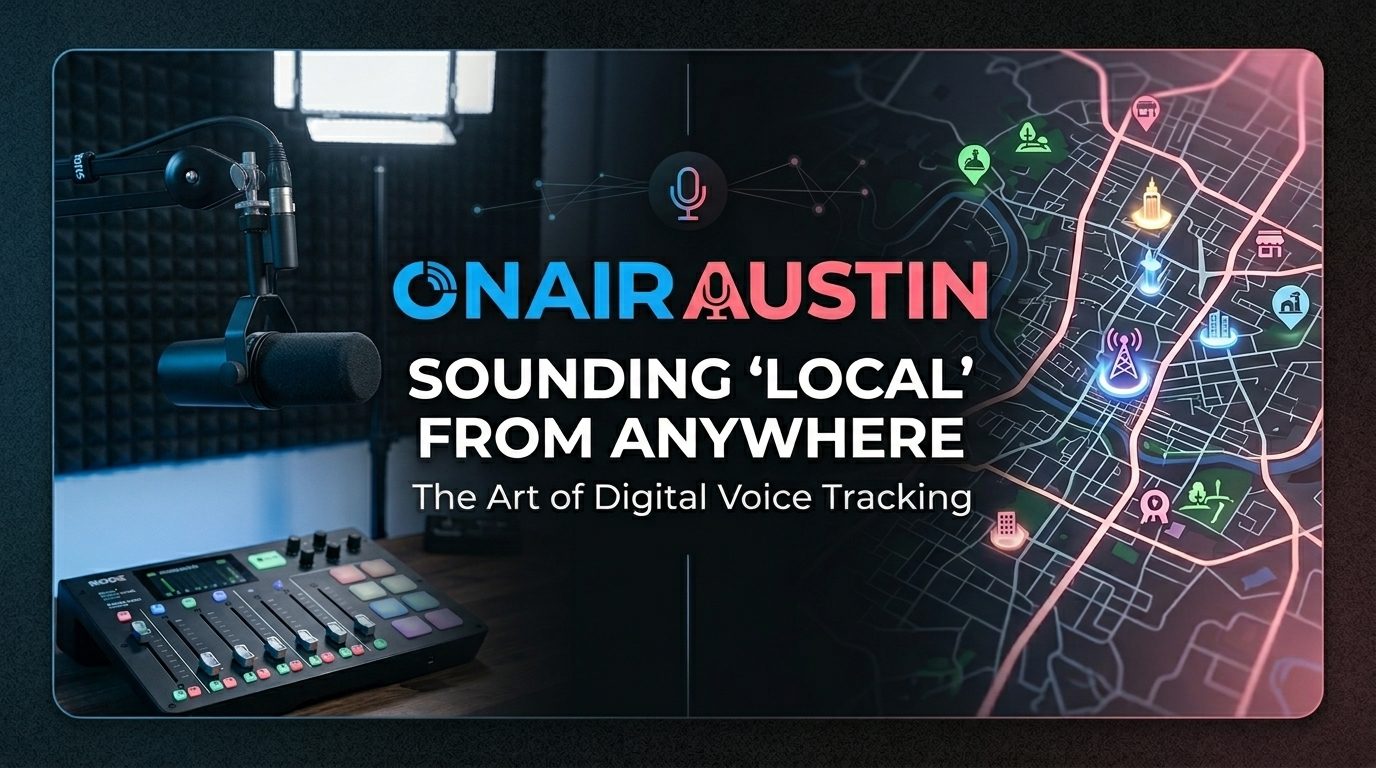
In the world of modern radio, the term "voice tracking" sometimes gets a bad rap. There’s a fear among Program Directors and listeners alike that if the talent isn't sitting in a studio on Main Street, the connection to the community is lost.
But here’s the truth: Localization isn't about where your feet are; it’s about where your head is.
Being a professional remote voice tracker means doing more than just reading liner cards. It’s about becoming a "digital local." Here is the workflow I use to ensure that when I’m tracking a shift for a station in a different time zone, the listener feels like I’m right there in traffic with them.
1. The "Hyper-Local" Prep
Before I even open the mic, I’m doing my homework. I’m not just looking at the national news; I’m looking at what’s happening in your backyard.
- The Weather Beyond the Temperature: It’s not just "75 and sunny." It’s "Perfect weather for that festival at the park this weekend."
- The Local "Water Cooler" Topics: What are people in the market actually talking about? Is there a massive construction project on the main highway? Did the local high school just win the state championship?
2. Using "Theater of the Mind"
Radio is a visual medium for the ears. By mentioning specific landmarks—the "notorious" intersection, the favorite local coffee haunt, or the specific exit that’s always backed up—I’m signaling to the listener that I know their world. It builds immediate trust.
3. Frictionless Integration
I’m not an "MP3-and-an-email" talent. I integrate directly into your workflow via VPN, whether you’re running WideOrbit, AudioVault, or Zetta. By recording directly into your logs, I save your team the headache of importing files or fixing transitions. You get a tight, professional shift that sounds natively produced—ready to air exactly when the log hits the hour.
4. Being a Partner, Not Just a Voice
A great voice tracker shouldn't be a "set it and forget it" service. I view myself as an extension of your programming team. If there’s a local station event or a remote happening, I want to talk about it. I want to hype up the local morning show and be a genuine part of the station’s "vibe."
The Bottom Line: You don’t have to sacrifice your station’s identity to save on overhead. You just need talent that understands that "local" is a mindset.
Ready to Level Up Your Station's Sound?
Localization is a mindset, and I’ve spent over a decade perfecting the art of "being there" for listeners, no matter where the studio is. I am currently accepting two additional market slots for custom, localized voice tracking across CHR, Hot AC, and Country formats.